

Why India Should Rebrand Itself as Bharat and Aspire for The MahaBharat (The Great Bharat) in the Future
Names are not just labels. They carry meaning, identity, and a connection to culture and history. In recent years, several countries have undergone a process of rebranding by changing their names to reflect their heritage, culture, or aspirations more clearly. Nations such as the Czech Republic (which became Czechia in 2016), Swaziland (which changed to Eswatini in 2018), and Turkey (rebranded as Türkiye in 2022) have taken this bold step toward reclaiming their cultural identity. Similarly, Holland, a term often used informally to refer to the country, was officially dropped in 2020, and the Dutch government decided to only use The Netherlands to promote a broader and more accurate representation of the country beyond just the regions of North and South Holland. This is an important example of how nations evolve their identities by reconsidering their names and presenting themselves more accurately to the world.
In the same spirit, India could significantly benefit from rebranding itself as Bharat, and perhaps, in the long-term future, as The MahaBharat—a reflection of its rich ancient civilization and the greatness of its global presence.
Reclaiming Our Identity: Bharat, Not India
The name “India” has colonial roots, tracing back to the British Empire’s influence on the subcontinent. The term was derived from the River Indus, which flows through present-day Pakistan, and was popularized during the British colonial era. While it’s not inherently wrong, “India” lacks the depth and historical significance that the name “Bharat” carries.
According to the Mahabharata, the popular story states that India was called Bharatvarsha after the king named Bharata Chakravarti. Bharata was a legendary emperor and the founder of the Bharata Dynasty, an ancestor of the Pandavas and Kauravas. He was the son of King Dushyanta of Hastinapur and Queen Shakuntala. Bharat is derived from the name of the Vedic community Bharatas, mentioned in the Rigveda as one of the original communities of the Āryāvarta, notably participating in the Battle of the Ten Kings. This historical and mythological significance connects us to the ancient civilization of Bharat.
The designation Bharat appears in the official Sanskrit name of the country, Bhāratagaṇarājya (Republic of Bharat). Bharat is a Sanskrit word, and it literally translates to ‘to bear/to carry’. It also means ‘one who is in search of light/knowledge.’ India has historically been known as Bharat, which aligns with the notion of being a nation in search of enlightenment and wisdom.
Bharat is the name we’ve always known ourselves by in our own languages and historical records. It is not just a label—it reflects the collective consciousness of our people, carrying with it a deep connection to the land, culture, and heritage.
India, as a term, may continue to be used internationally for recognition, but rebranding domestically to Bharat would serve as an affirmation of our self-respect, pride, and ancient roots.
Why Bhartiya Instead of Indian?
Further deepening the need for a cultural shift, it’s time we reconsider how we refer to ourselves. The term Indian is also a colonial construct, coined during British rule. The word itself doesn’t have strong cultural or linguistic roots in the Indian subcontinent. When we refer to ourselves as Indian, it often evokes an external, foreign influence rather than a term that belongs to our indigenous identity.
Instead, we should be called Bhartiya. Bhartiya is the true term derived from Bharat, and it resonates with our ancient civilization and culture. Bhartiya means “one who belongs to Bharat”—a term that connects us directly to our history, traditions, and the vast cultural heritage that spans thousands of years. By adopting Bhartiya in place of Indian, we move closer to reclaiming the authenticity and pride that should accompany our national identity.
Why The MahaBharat?
Looking ahead, The MahaBharat could be a grand, visionary title that echoes our collective aspirations and unites us under a banner of pride. Maha means “great” in Sanskrit, and it would amplify the idea of a renewed, powerful nation that draws from the strength of its ancient civilizations. The name MahaBharat would be symbolic not only of our past glory but also of our forward-looking, aspirational future as a global powerhouse.
By adopting such a name, India would send a powerful message to the world that we are not merely a nation of diverse cultures and religions but also a civilization that is grounded in history, spirituality, and values of unity and diversity.
The Benefits of Rebranding: Strengthening Cultural Identity
One of the biggest reasons to change the name to Bharat and, later, The MahaBharat is to strengthen our cultural identity. Over centuries, we have been subjected to foreign invasions, colonial rule, and a constant process of social change. Despite these challenges, India/Bharat has retained its rich traditions, art, and philosophy.
By embracing Bharat and Bhartiya, we reaffirm our deep connection to this legacy and bring attention to our ancient roots. This cultural revival will ignite a sense of pride and unity among citizens, transcending geographical and cultural boundaries. It will also pave the way for a unified vision of India’s place on the world stage. The name would better reflect our ancient wisdom and offer a powerful rebuke to the remnants of colonial influence.
The Currency Redesign: Bharat Mata and the Symbols of Knowledge
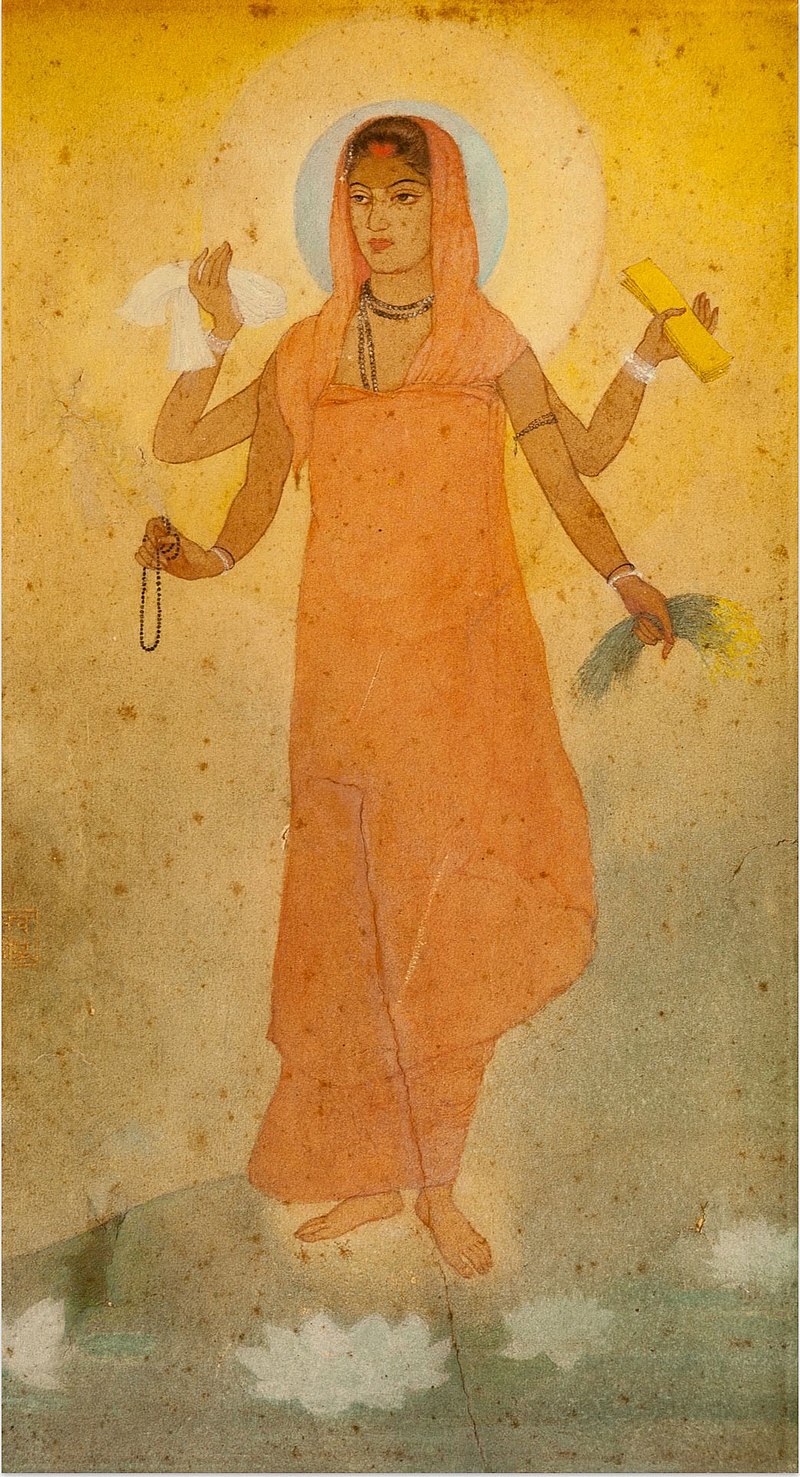
Another important aspect of rebranding involves how we present our nation to the world, including on currency. Currently, Indian currency notes feature the portrait of Mahatma Gandhi, a figure of immense significance in our history. While Gandhi’s contribution to India’s independence is invaluable, we must ask ourselves whether it is appropriate to continually place an individual’s image on the currency. This idea stems from a time when individuals were valorized, but now, it’s important to focus on symbols that represent the unity and spirit of the entire nation.
Instead of printing portraits of men—who, no matter how revered, cannot fully embody the essence of an entire nation—why not shift our focus to Bharat Mata, the personification of India as a mother figure? Bharat Mata symbolizes the nation as a whole, representing not just one individual, but the collective unity, history, and culture of the entire country.
Beyond Bharat Mata, we could incorporate the profound symbols of knowledge, wisdom, and spirituality that form the bedrock of Indian civilization. These could include representations of the sacred Om symbol, which is central to the philosophy of Dharma, or illustrations from the Upanishads that encapsulate the ancient wisdom and spiritual heritage of Bharat. These symbols, which have guided our civilization for thousands of years, can be used as educational tools on currency notes to inspire a deeper understanding of our heritage.
Including such symbols on currency notes would allow for the education of citizens and visitors about the profound philosophy that underpins our nation. By associating our currency with knowledge and dharma, we move beyond mere financial transactions and connect our people with the wisdom of our ancestors. This would encourage not only financial prosperity but also spiritual and intellectual growth.
This redesign could also feature the Ashoka Chakra, representing the principles of Dharma and the wheel of law that has guided Bharat’s civilization. These symbols would inspire pride and evoke the unity of the nation as a whole, reinforcing the idea of Bharat as a living, breathing entity made up of all its citizens.
Adopting the Vikram Samvat Calendar: A Step Toward Cultural Revival
In addition to rebranding our name, we must also take steps to restore and reclaim other aspects of our heritage, including the calendar system we follow. Currently, India officially follows the Gregorian calendar, which has little connection to our ancient roots.
Nepal, a neighboring nation, has adopted the Vikram Samvat calendar, which has been in use for centuries in the Indian subcontinent. The Vikram Samvat is a lunar-solar calendar that is used by Hindus in India and Nepal. It is about 57 years ahead of the Gregorian calendar. In 2025, for example, the Vikram Samvat year will be 2081 BS (Bikram Sambat).
The Vikram Samvat calendar is based on the cycles of the moon and the movement of the sun. The year begins in the month of Chaitra, which corresponds to March-April in the Gregorian calendar, and ends with Phalguna Amavasya, typically in February or March. This calendar is not just a system of marking time—it also serves as a reminder of our cultural heritage, helping to preserve and propagate the significance of our festivals, religious events, and almanacs (panchangs).
Named after King Vikramaditya, who established it after defeating the Sakas, the Vikram Samvat is more than a timekeeping system. It’s a key cultural tool that celebrates our past and serves as a reminder of our continuity. Adopting this calendar officially would reinforce our cultural roots and help connect the present with the rich historical legacy of Bharat.
Practical Considerations: A Gradual Change
The challenge of changing a nation’s name may seem daunting, especially when considering the scale of the effort involved. However, we don’t need to do it all at once. In fact, a phased approach can make the transition easier and more cost-effective.
For example, changes could start with newly issued documents, including passports, currency notes, and official papers. Older documents could retain the term “India” while the new ones will reflect the new name. Similarly, we could start with official government communications, educational institutions, and state-run media channels. Over time, as the country adjusts, the name Bharat would naturally seep into everyday usage.
This process is not as costly or disruptive as some may fear. Just as we’ve embraced new technologies and systems, transitioning to Bharat will be a symbolic gesture that reflects our historical continuity.
Global Impact: An Identity That Inspires Pride Worldwide
The global perception of India is shifting. From an ancient land of mysticism to a modern economy and tech hub, we are now gaining recognition for our contributions in various fields, including science, technology, art, and business. But to elevate ourselves further on the global stage, we must embrace an identity that truly embodies our potential.
Rebranding as The MahaBharat and Bhartiya will not only strengthen our position as a rising global power but also encourage other nations to take pride in their own cultures and histories. Just as we admire nations like Japan, China, and Egypt for their unique identities and ancient civilizations, the name MahaBharat can serve as an inspiration for a unified and proud nation.
A New Era: Redefining Our Future
In conclusion, changing the name of our country to Bharat, and potentially The MahaBharat in the future, is not merely about semantics—it’s about pride, identity, and redefining our future. It would reflect our ancient legacy while simultaneously embodying our modern aspirations. In a world where nations are increasingly asserting their identity and reclaiming their cultural heritage, it is time for India to step forward and do the same.
By embracing Bharat and eventually The MahaBharat, and calling ourselves Bhartiya, we are not just changing a name; we are rebranding our ancient culture and positioning ourselves as a global beacon of pride, unity, and strength. Additionally, replacing individual portraits on currency with the image of Bharat Mata and the symbols of Dharma and the Upanishads will symbolize our nation’s unity, wisdom, and spiritual heritage. Finally, by adopting the Vikram Samvat calendar, we can further reconnect with our cultural roots. It’s time to reconnect with our roots and make the world recognize the greatness of Bharat.
